
Last month my first novel, “Scouts’ Honor,” was published by Inlandia. As an academic historian, I’ve written and edited myriad books, but none of that prepared me for the novel-writing experience.
Historians have the luxury of starting with documents. Novelists start with an idea and a blank sheet of paper. The challenge is to transform that idea into a page-turning, book-length tale of relatable characters, engaging plot, and maybe, just maybe, something worthwhile to say.
As do many first-time novelists, I started with personal experience: my Kansas City, Missouri, Boy Scout teenage years. My brother Gary and I became Eagle Scouts. Dad, an adult volunteer leader, earned numerous scouting awards.
Among the memorable times of my youth were the two weeks I spent every summer, from 1947 to 1951, at Kansas City’s Boy Scout Camp Osceola, located in hilly, forested, rural southwestern Missouri. From those memories emerged the idea of a novel.
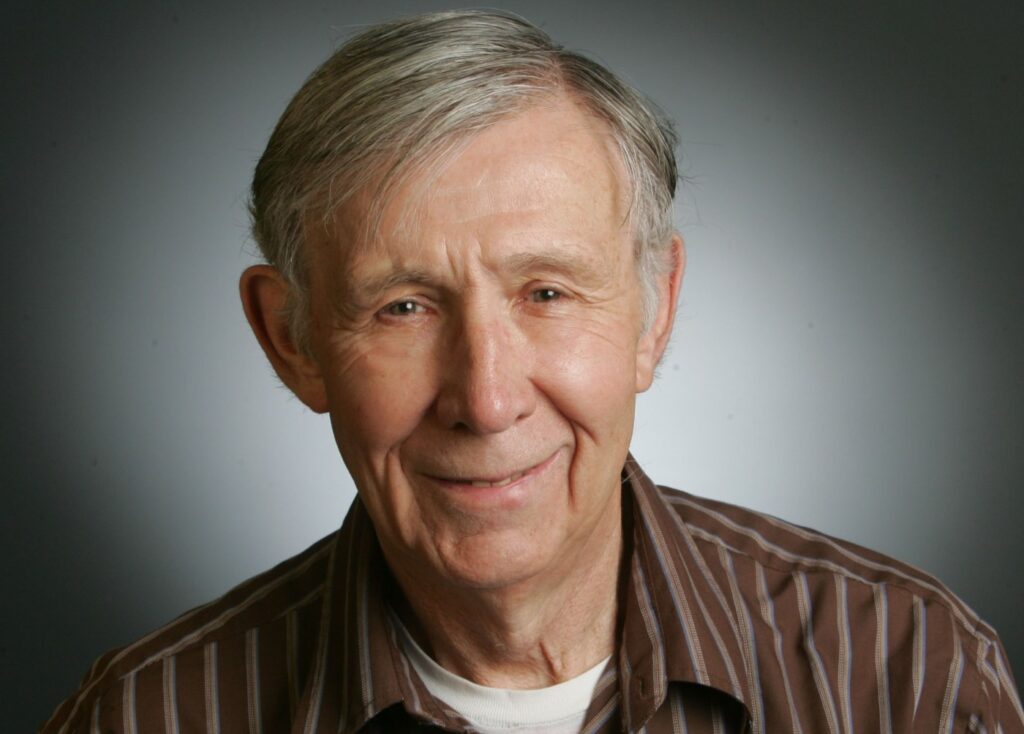
“Scouts’ Honor” is the first novel from Carlos Cortés, a professor emeritus of history at UC Riverside. (Courtesy of Inlandia Institute)
Camp Osceola was beautifully organized and carefully supervised to provide boys with a safe, yet challenging stay. For the novel, I asked myself these questions: what if something unusual had happened at camp that propelled the boys and their leaders out of their comfort zones? How might the teenage scouts and adult leaders have reacted in those isolated circumstances, facing an unprecedented situation that went far beyond scout regulations and camp protocols?
For that tradition-busting event, I created the mysterious death of Harry Vincent, a 14-year-old scout. On page one, another scout stumbles over Harry’s body on the slippery, twisting path leading to the troop’s six-hole outhouse. From there the story develops.
Was the death accidental, or was someone else involved? If the latter, then who — and why? If the death were accidental, why are the scouts, their leaders, local government officials, and even the hometown Kaioga City newspaper behaving so strangely? What happens if an outsider — in this case a neophyte female newspaper reporter — is sent to write a story about Vincent and, in the process, becomes suspicious of what is taking place?
My real-life Camp Osceola was truly isolated. It had one telephone and sparse electricity. At night it operated via campfires, flashlights, and the ghostly glow of Coleman lanterns. My fictional Camp Matulia shares Osceola’s isolation, putting scouts and leaders greatly on their own. Following Harry’s death, the camp begins to echo, although not mirror, “Lord of the Flies.”
Nothing like Harry’s death ever happened during my camping years. However, some of my imagined events bear a close resemblance to things that I witnessed and experienced at camp. None of the characters are exact replicas of reality, but many of them speak, act, and react like people I’ve known throughout my life. In the process of writing version after version, I increasingly began to inhabit and think like my characters, while also trying to capture their behavioral and speech patterns.
As I was penning conversations, the characters would sometimes take over and say what they had to say. I just put down the words. Sometimes my characters told the truth; other times they lied or resorted to half-truths, leading to subsequent half-truths. As I wrote, the story became a tale of clashing truths, a mystery in which characters recall and relate events in radically different ways.
From draft to draft, my story of Camp Matulia evolved from a boys-will-be-boys escapade into a decades-girdling mystery. The tension grows as Ardith Millett, the timid young female reporter of 1948, becomes a confident veteran journalist of the mid-1980s. Haunted by the fact that her newspaper editor had muted her original story, Ardith decides to re-investigate the event for her forthcoming book, “Unfinished Stories.” This decision ultimately sets her on a collision course with the still-living Matulia participants, for whom the half-truths that prevailed in 1948 become the potential traps of the 1980s.
At my Aug. 31 Riverside book launch, UC Riverside English professors John Ganim and Ricky Rodríguez joined me for a panel discussion. They suggested that the book seemed cinematic, with the relentless momentum of a movie (that was my goal). They also observed that it was a type of modern noir (something that I had not intended, although it may have been lurking in my subconscious as I wrote).
When I signed off on the final draft for Inlandia, I felt both relief and fulfillment. At 91, I was happy that my arduous, more-than-decade-long novel-writing journey had come to the end. From here on, it’s up to the readers. The day after the launch, one of the attendees wrote to me that she had read the entire book in one sitting. Mission accomplished, I hope.
Carlos Cortés, a professor emeritus of history at the University of California, Riverside, is the author of a memoir, “Rose Hill: An Intermarriage before Its Time,” and a book of poetry, “Fourth Quarter: Reflections of a Cranky Old Man.” He can be reached at carlos.cortes@ucr.edu.
Recent Comments