
Most aspiring chefs break into the biz washing dishes in bustling restaurant kitchens, but for Vinh Nguyen, that education began at home.
“My family and I made friends with everybody, mostly because of my mom’s cooking,” Vinh said during a recent phone interview. “My mom would make food and bring it over unabashedly to neighbors’ houses, so being the youngest one, I always followed her in the kitchen like I was her baby sous chef.”
Before arriving in America, Nguyen’s family fled the Vietnam War in 1969 and arrived at an international refugee camp. His family stayed there for 11 months before being sponsored to America, and during that period, his mother gave birth to him.
They arrived in Clayton, Alabama, first, where they lived with a Presbyterian community before moving to California when he was two years old. He spent his childhood in Hollywood neighborhoods, hand-delivering spring rolls with his mother, who insisted their neighbors try the dish with her homemade sauce.
“Immigrant food has always been important to me for that reason,” Nguyen said. “We’re a family of hardworking immigrants, and my older sister is a doctor now, which is crazy because she couldn’t even speak English until she was eight when she first got here. I think the only English word she knew was onion.”
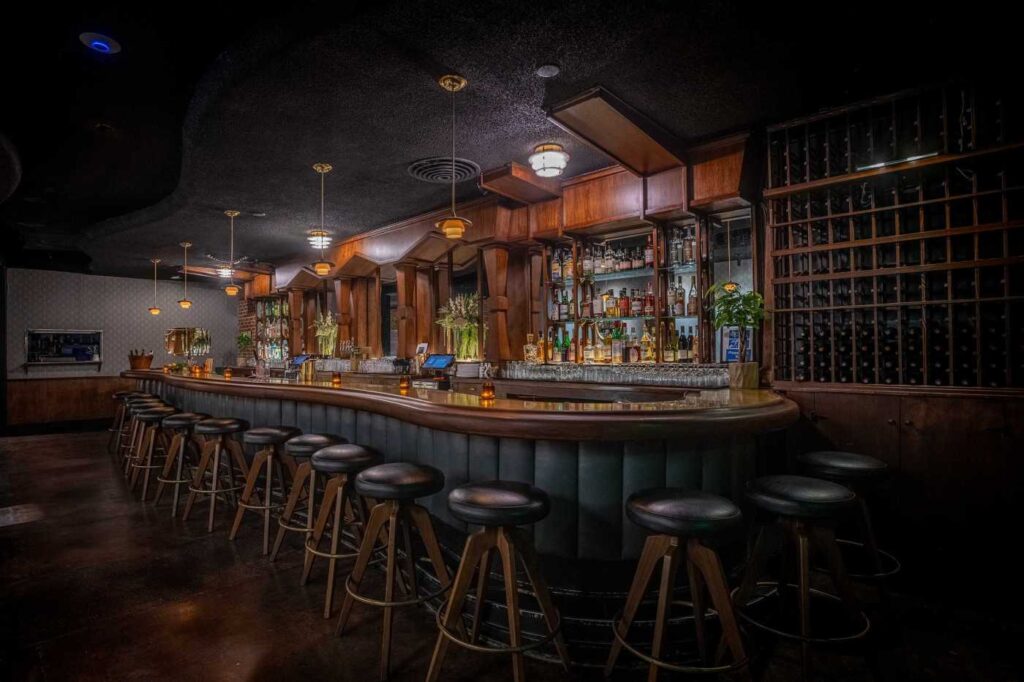
Nguyen has since been at the helm of restaurants such as Cafe Colette, Silent H and Grumpy Pig, where he’s spotlighted Asian food, and his fourth restaurant, The Airliner in Los Angeles’ Lincoln Heights, shares that same mission. He opened the space with his partner, Gary Wang, in 2023, remodeling the 100-year-old building and adding an Asian flair to the bar and music venue that had existed in its previous iterations. The restaurant’s izakaya-style menu boasts the bold flavors of Chinese, Indonesian, Thai, and Vietnamese dishes, inspired by his culinary experiences in Shanghai, Tokyo, Ho Chi Minh City, and Los Angeles.
More recently, Nguyen and his team spent two years renovating their music venue, which officially opened in July. The space, which can hold just shy of 100 people, features engineered wood, topographic acoustic panels and textured concrete columns that resemble the inside of an acoustic guitar. Visitors who take the trip upstairs are transported to a world fit for audiophiles, where intimate concerts, live events, and other special occasions, such as private parties and stand-up comedy shows, will take place throughout the year.
“I hate the phrase elevating food, but I want to elevate the Vietnamese and Asian style of eating to mirror Western-style bars,” he said. “We have a huge foodscape of immigrant food in the San Gabriel Valley, specifically with Korean, Chinese and Vietnamese food, but the vibe is like an afterthought, or sometimes the services are lacking. I wanted to put Asian Food in a venue that celebrated service, hospitality, music and design as much as it did to food.”
Related links
Why Westminster? Eleven reasons the Vietnamese came to Little Saigon – and why they stayed
During a visit to The Airliner, Nguyen shared some of the bar and restaurant’s most popular dishes, explaining the inspiration behind each. Here’s the top five Asian-inspired bites.
The Hamachi crudo is on the menu at The Airliner in Los Angeles. (Photo by Charlie Vargas, Los Angeles Daily News/SCNG)
Hamachi Crudo
The Hamachi Crudo might be a shareable dish, but once you taste the first bite, you may consider ordering your own. The dish is a yellowtail samashi with shoyu, yuzu, black sesame, shiso and chili oil, combined to make each bite fresh and decadent. The combination of a handful of garnishes gives the smooth and delicate sashimi a sweet, smoky, and spicy flavor with a little bit of crunch.
“I work with a very specialty Japanese purveyor, because there are a couple of things that I can’t get anywhere else in LA, and one of them was white soy sauce or white shoyu,” Nguyen said. “We started working with mutual trading, and they recommended this really nice samashi. My chefs decided to make the Hamachi Crudo with what we already had in the kitchen. We had previously used shoyu in a Japanese potato salad, so we added the sauce to create a basic crudo. We decided to top it off with a tiny puff rice cracker and my favorite herb, shiso. I think it’s a home run crudo and is our number one seller right now.”
The Hunan BBQ pork ribs are on the menu at The Airliner in Los Angeles. (Photo by Charlie Vargas, Los Angeles Daily News/SCNG)
Hunan BBQ Pork Ribs
As someone with high standards for BBQ ribs, I wasn’t sure what to expect, but I was quickly won over. These ribs were fall-off-the-bone tender and didn’t need a sauce to jump-start the taste buds. The dish is a simple combination of candied chicken and cumin seeds, served with cilantro stems. Nguyen said the dish was something he wanted to recreate from his and his wife’s favorite date spot, Di Shui Dong in Shanghai, a restaurant known for its spicy wings and Hunan-style cuisine. In Shanghai, the ribs are fried in a wok, but Nguyen says their kitchen is too small to accommodate one, so they took a different approach.
“We braise the ribs with five spice and rice wine until they’re super tender and soft, and then we do a second cook on it,” he said. “That’s where we slice, portion them, and cook them on a plancha with corn starch soy sauce slurry, which is similar to what they do in Shanghai, but here we don’t have that option with the wok. So, we glaze them, and when you order, we fry them to heat back up again. Then, we drizzle all the beautiful, magical stuff over it —a small batch of cumin, hand-chopped Thai chili, and ginger, all batch-fried in two cups of oil. We have enough of this garnish for all the ribs, and then that oil that you’re left with is this beautiful, pomegranate red chili oil that we drizzle over the ribs so it tastes just as good as the ones that we’ve had in Shanghai.”
The Shanghai triple onion noodles are on the menu at The Airliner in Los Angeles. (Photo by Charlie Vargas, Los Angeles Daily News/SCNG)
Shanghai Triple Onion Noodles
While most bars serve the usual handheld sandwiches, burgers, fries, and chicken strips, few offer noodles, especially of the caliber of this Shanghai-inspired staple. These noodles are also inspired by Shanghai flavors and a dish served through a few carts and stalls around the city. The recipe, courtesy of Wang, Nguyen’s business partner, is an onion lover’s delight.
The classic recipe fries a massive amount of onion in the wok, which is then skimmed out and used to dress the wheat noodles. Then the cook takes all the hearts from the fried onions and tosses them into a pot with some soy sauce, a little bit of sugar, and reduces it down to create something almost like a sticky glaze. When customers order noodles in Shanghai, the cart or booth cooks fresh wheat noodles, then dresses them with a fortified soy sauce and adds crispy onions on top.
“We thought, ‘Oh, wouldn’t it be kind of silly but kind of cool to have the triple onion be in the onions that we actually use for it?’” Nguyen said. “So we do use four onions. We use green onion, red onion, white onion, and, just for extra flavor and visual draw, Korean chives. When we make a batch, it smells like the most beautiful onion rings are being cooked in the kitchen.”
The Chongqing chicken wings are on the menu at The Airliner in Los Angeles. (Photo by Charlie Vargas, Los Angeles Daily News/SCNG)
Chongqing Chicken Wings
No bar menu is complete without wings, and The Airliner’s variation is a flavorful one that, like its ribs, requires no sauce. The Chongqing chicken wings are crispy fried and made with a dry rub that was inspired by the Laziji, the fiery Sichuan dish known for its mouth-numbing heat and fragrant aroma. The original dish usually consists of deep-fried, bite-sized chicken pieces stir-fried with a mountain of dried red chilies and Sichuan peppercorns.
“We love that flavor profile, but we don’t want you all to sit at a bar with a giant plate of chilies and pick out little pieces of chicken, so we decided to address all those flavors into a dry dredge,” Nguyen said. “They’re just wings that we brine, and then we dredge in this mixture made with northern Chinese spices and chilies that we grind together. When they pop out, we drizzle them with our homemade chili oil, and for texture, we sprinkle on aromatics, which are like poppy seeds, crispy shallot and crispy garlic, to give it a nutty, crispy texture to go with the juicy wings and the chili oil.”
The hojicha tres leches is on the menu at The Airliner in Los Angeles. (Photo courtesy of The Airliner)
Hojicha Tres Leches
A cake at a bar sounds like the beginning to a punchline of a bad joke, but after a taste of the hojicha tres leches, The Airliner shows why it deserves the last laugh. This cake is mouthwatering and another dish you’ll want to order for yourself, and maybe one to go, too. The soft, moist cake with a smoky Japanese hojicha tea flavor melts in the center of your mouth, making a strong case to be the best tres leches in Los Angeles.
The fusion dish was created by the restaurant’s Salvadorian sous chef, Vanessa Salguero, who has long been making the dish, which has appeared at the birthday parties of celebrities. The Airliner’s version takes her dish and adds an Asian twist to the classic Latin American dessert. Nguyen said while he wanted to spotlight Asian cuisine, he also wanted to pay homage to the shared Asian-Latino communities in Lincoln Heights, which borders Chinatown and El Serrano. He added that they wanted to pair the hojicha tea with another Japanese flavor and arrived at a chocolate crepe that is crumbled and sprinkled on top as an accent, accompanied by whipped cream and toasted rice powder.
“The tres leches has been here since day one of our two years in existence here,” he said. “I still love looking out and seeing someone eat that cake because it’s like the best last impression we can give.”
Find it: The Airliner, 2419 N. Broadway, Los Angeles.
Related Articles
Recipe: Pomegranate seeds make a tasty relish for pork chops
National Cheeseburger Day 2025: Where to find deals
Heirloom Bean Encuentro festival fights fear with food and togetherness
Recipes: Maple syrup is much more than just a partner for pancakes
Old Towne Burger Fest crowns its first champion, draws big crowds
Recent Comments